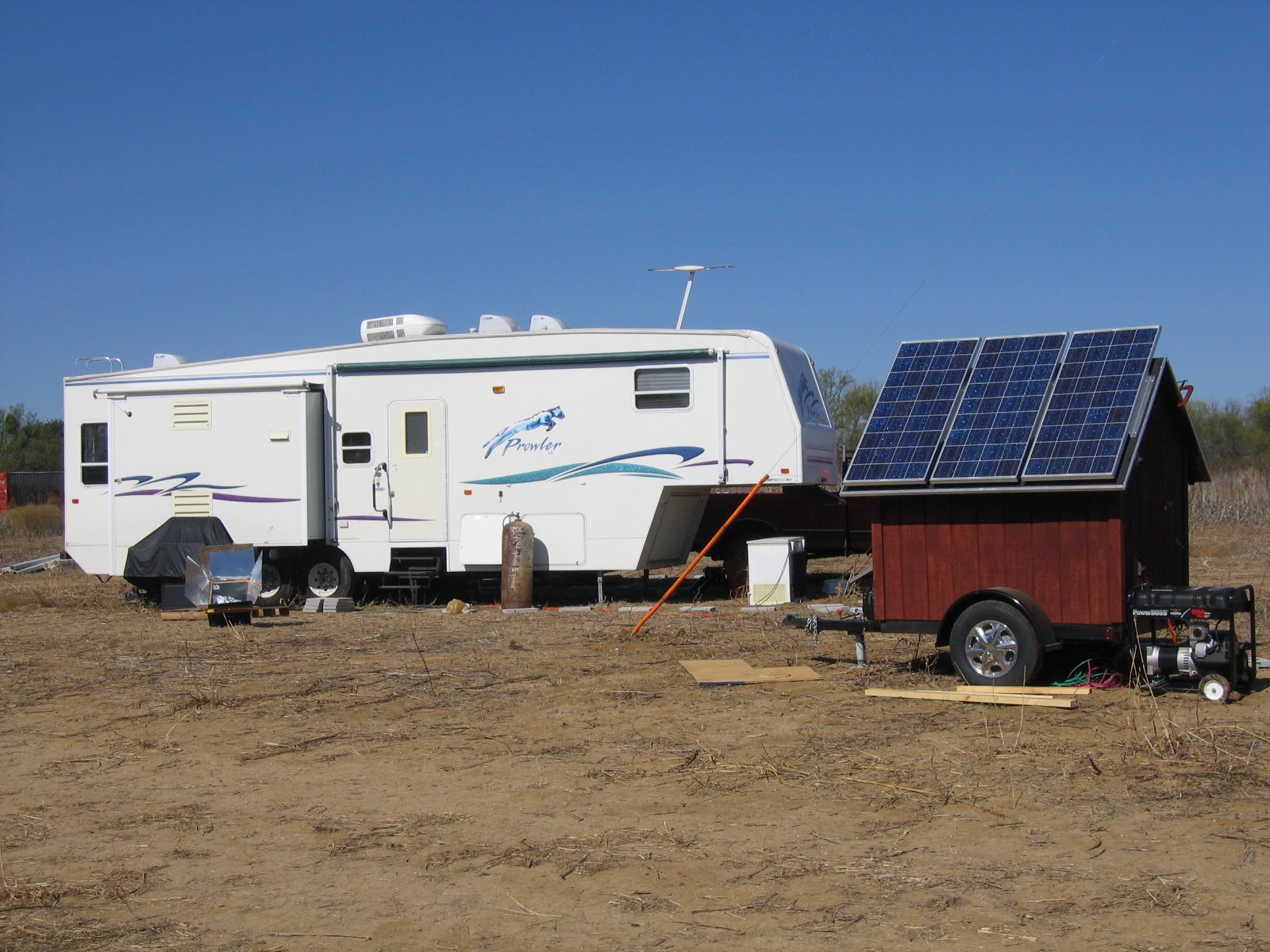
Hogs, Hogs on the Range
Currently, our only pig pen area is the place set up with the farrowing shed. One day if the Lord wills, we hope to have pigs as part of an animal rotation scheme. But until then, I thought it might be beneficial to try to allow the pigs in the farrowing area to semi-free range (allow them out of the pen but still keep them controlled) where there was grass and other eatables available. This hopefully would also help us cut back on the store-bought feed. Michael had done this with his pigs by surrounding a forage area with electric fence driven by solar power, and so I thought I'd go the same route.
For us, this involved pounding rebar stakes into the ground every 12 or so feet apart, pounding metal T-posts at the corners, attaching the proper plastic electric fence wire insulators for rebar and T-posts, and then running the electric wire. Here is a picture of the fence:
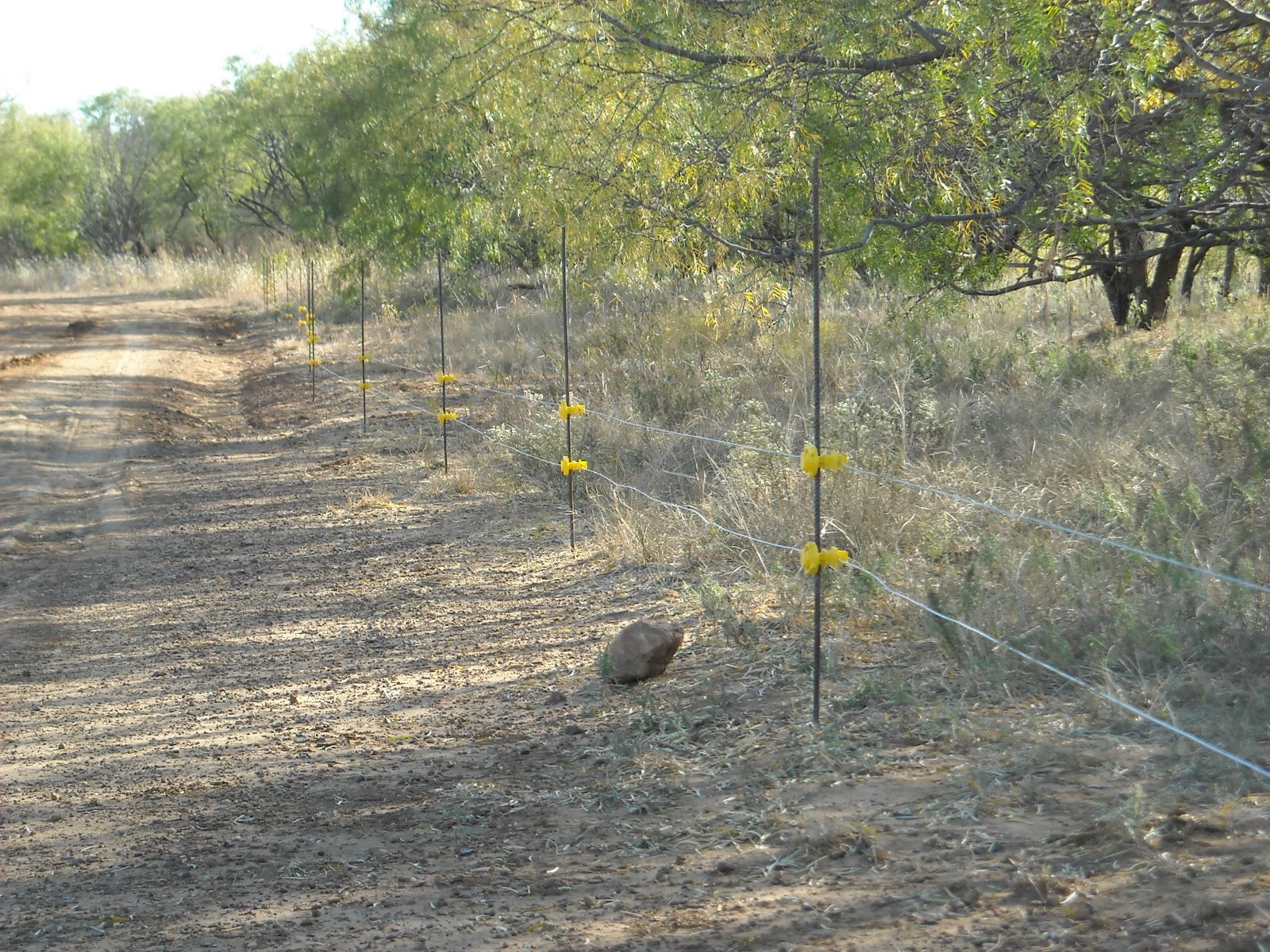
And here is a reverse pictured of the same area:
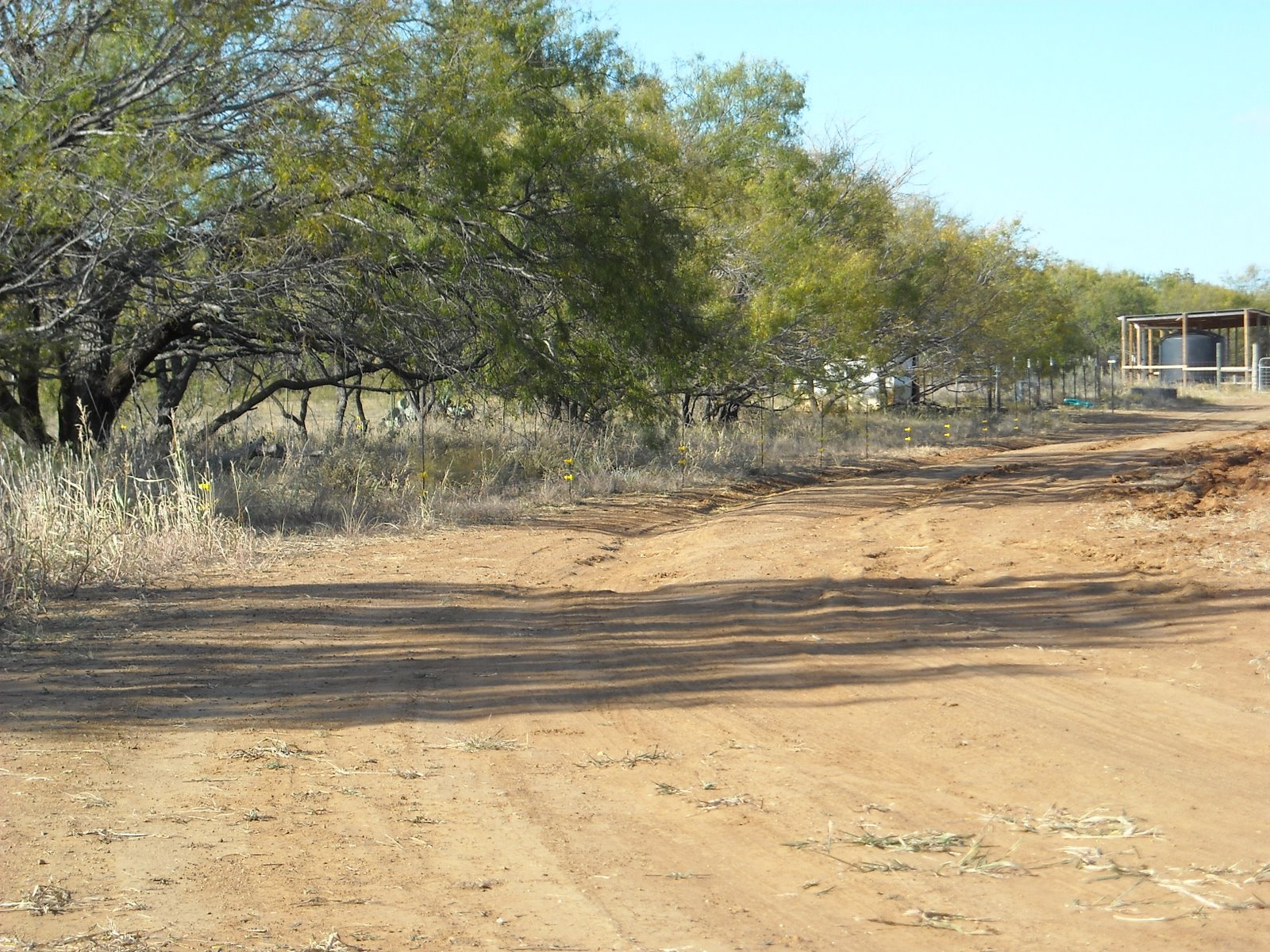
In running the first wire strand, I found that I needed to attach the plastic insulators for the T-post corners after running the main fence wire through them. If you wire them to the corners before hand, which I did and initially thought was just part of a good preparation process for running the fence wire, there was no way to then actually run the fence wire through them when running the wire off of a spool. So I had to undo and redo the wired corners as the wire was run by. Oops. I did however get it right on the second strand.
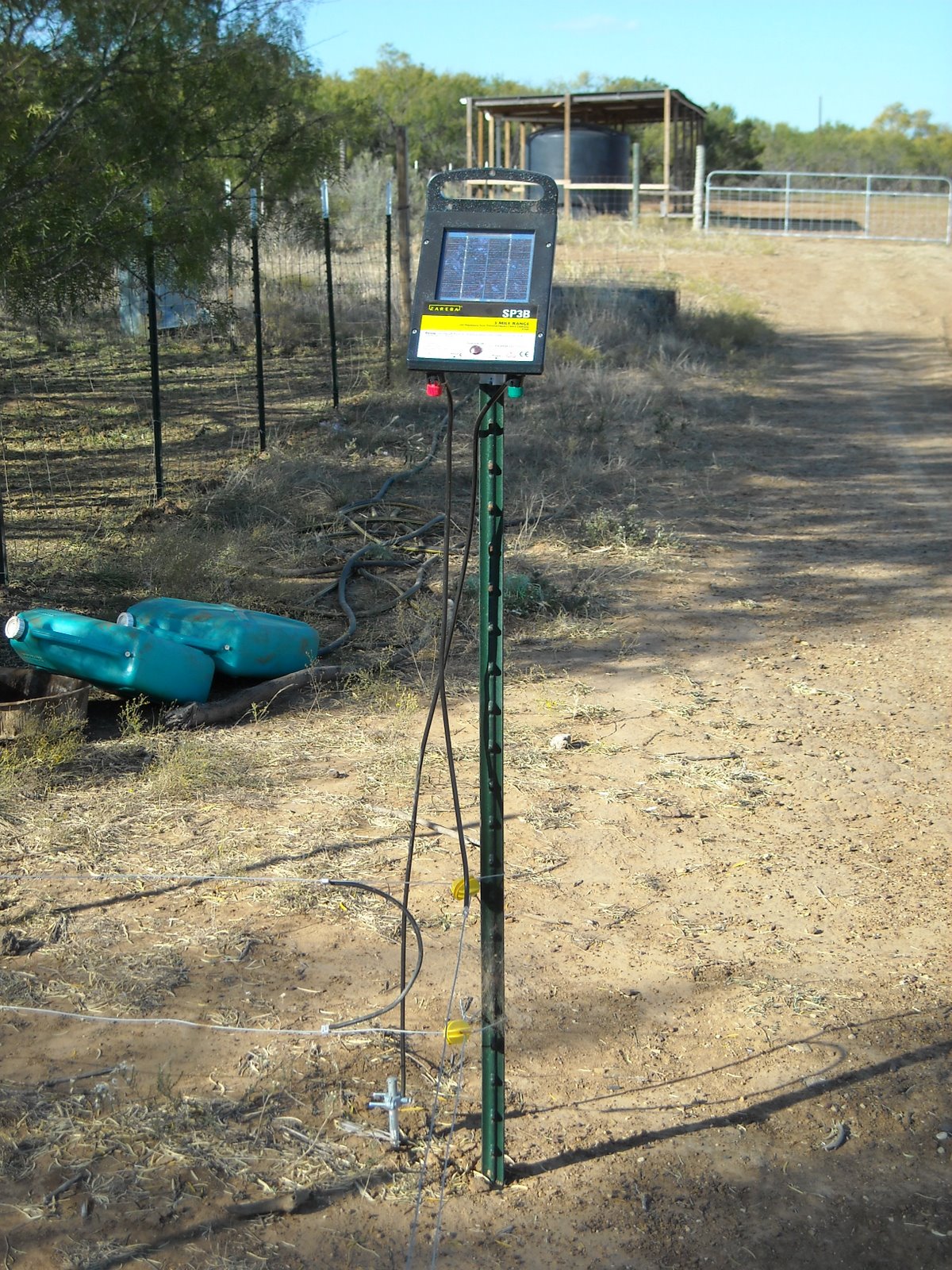
But once the wire was run, it was time to hook up the solar powered electric fence power source. Part of wiring it up was driving into the ground a 6' galvanized rod for grounding:
Oh Give Me a Home
In considering the distance between the ground and each of the fence wires, I set the plastic wire holders attached to the rebar about one middle finger to thumb hand span above the ground and then then same span above that for the second wire. Well, once we turned the system on and let the pigs out, apparently not only did we agitate them too excitedly for the moment, but the upper wire just said "doorway" to the pigs; and they both proceeded to hurtle between the two wires and off into the field.
Well, after chasing them back into the pen area, and with the obvious fence failure, I was unsure as to how to proceed. However, I decided to try lowering the top wire half the span between it and the lower wire; and also thought that when we would let them out we would try to make sure they weren't stirred up so much.
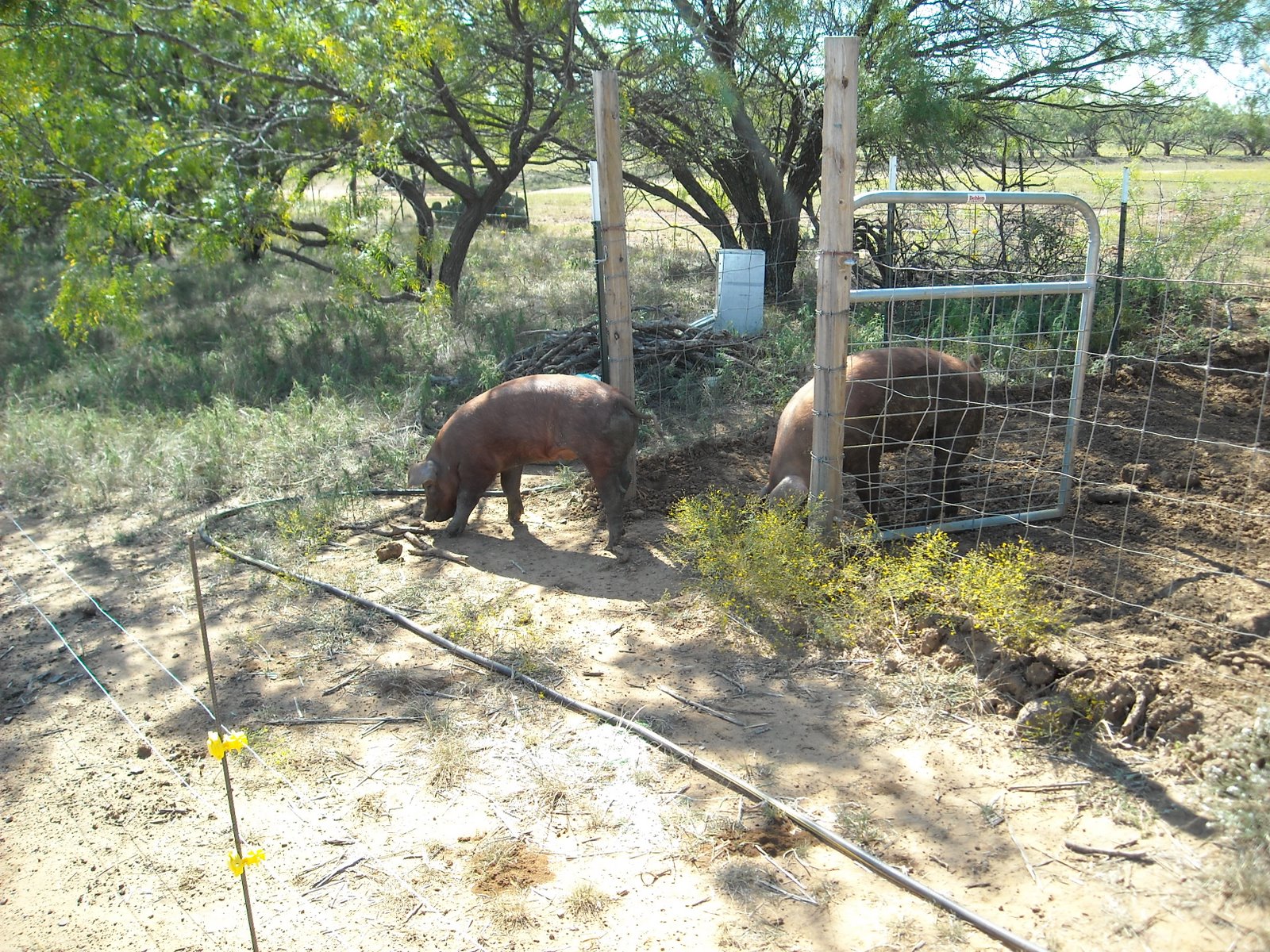
That seemed to help. Here they are discovering their new roaming land:
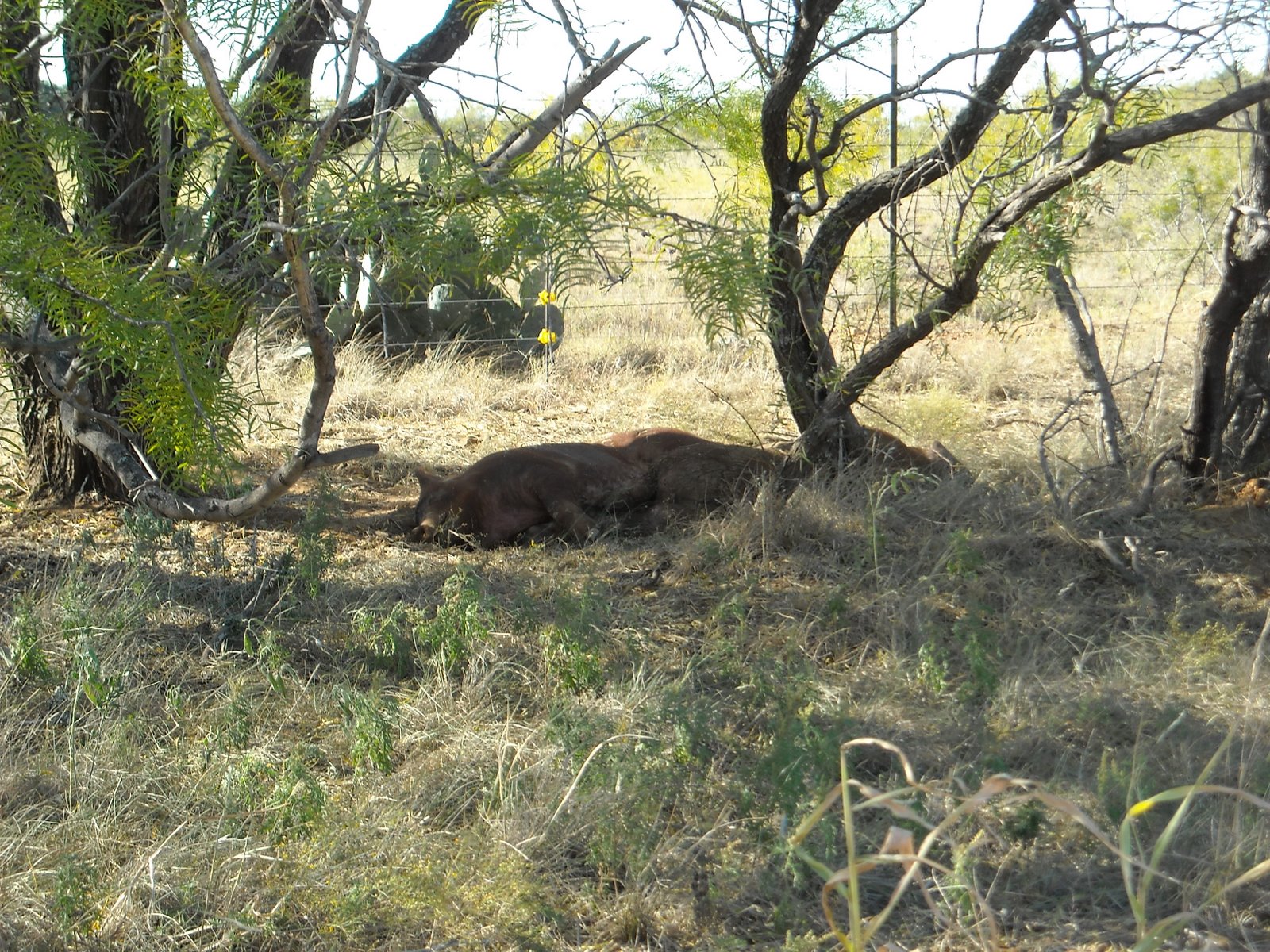
And...well, I guess things are all right now:
We once again thank the Lord for His provisions and wisdom, insight and help with the processes of building our homestead.
-- David
Labels: animal husbandry, hogs, pigs, solar power
posted by David and Susan Sifford @ 11/10/2008 08:12:00 AM
2 Comments